
Last updated November 25, 2026
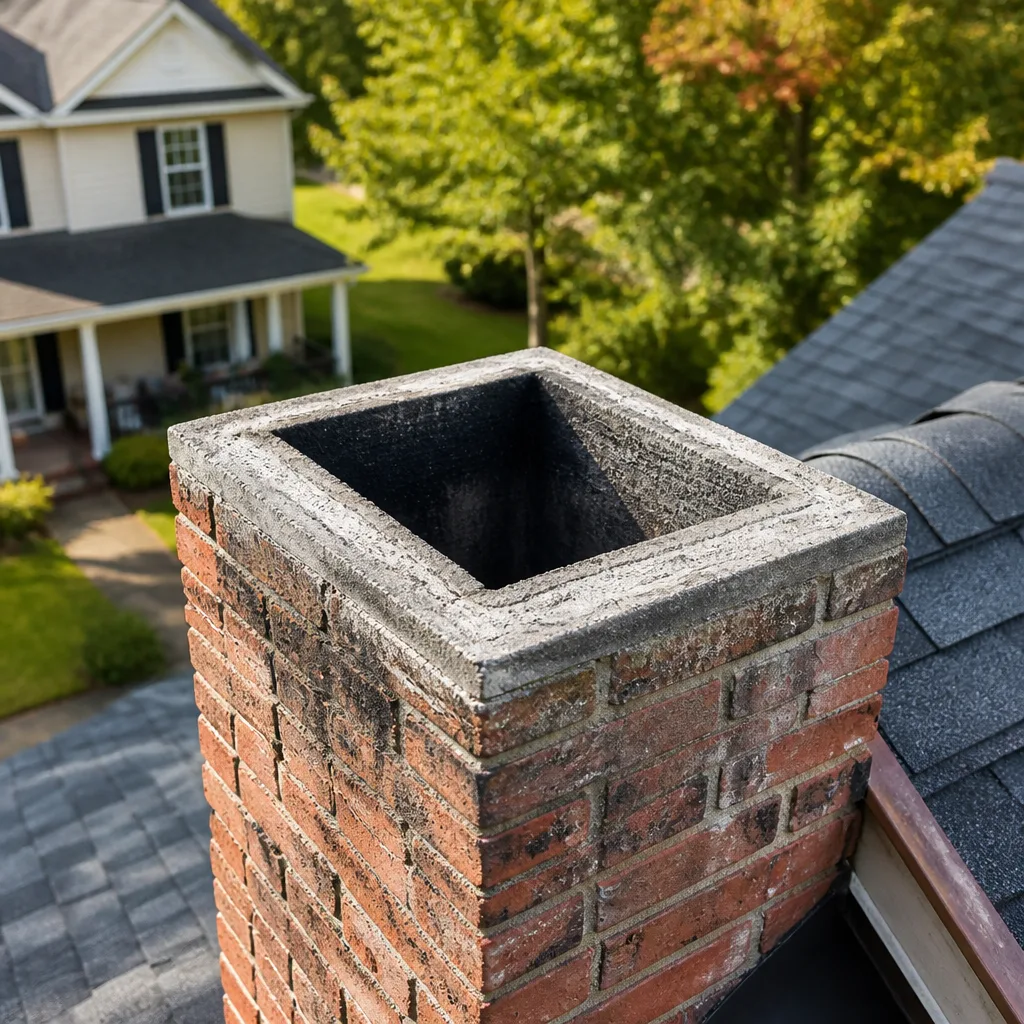 Sweep & inspection
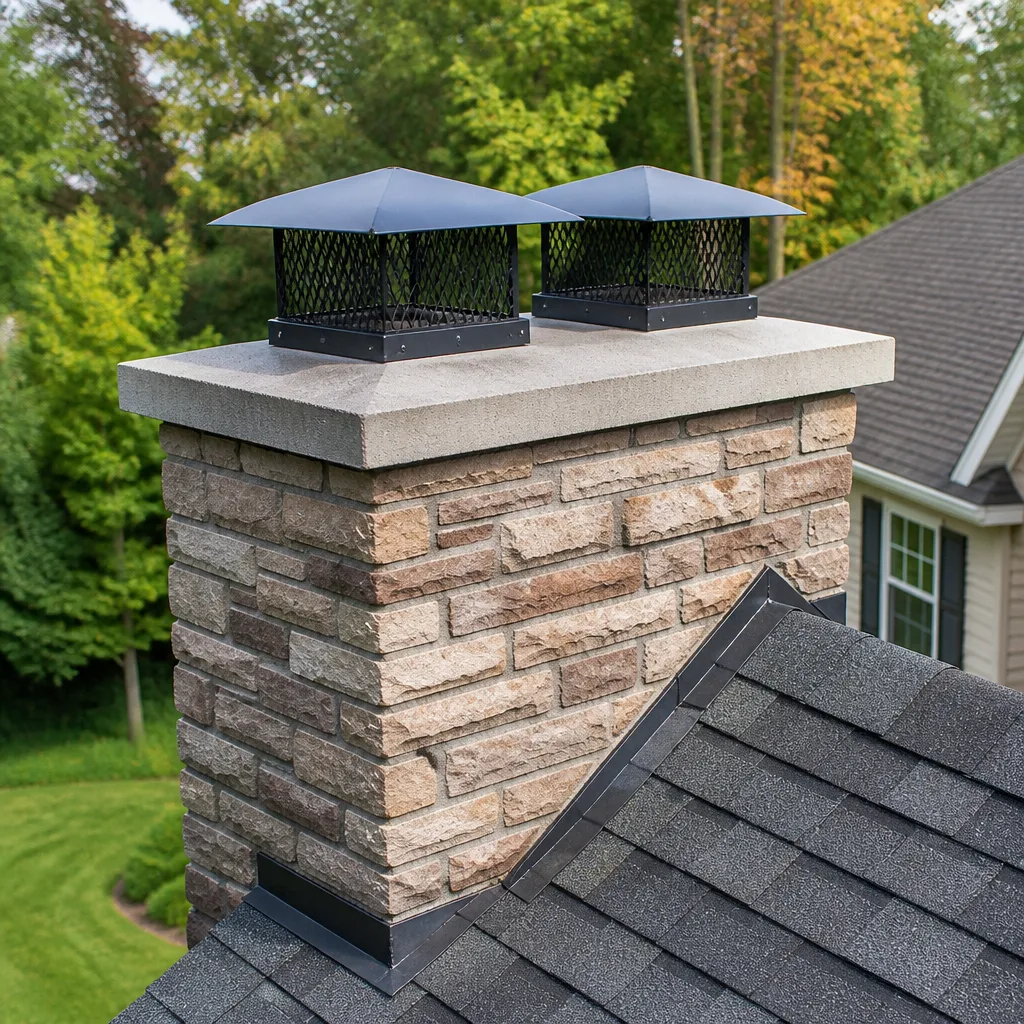 Caps & crowns
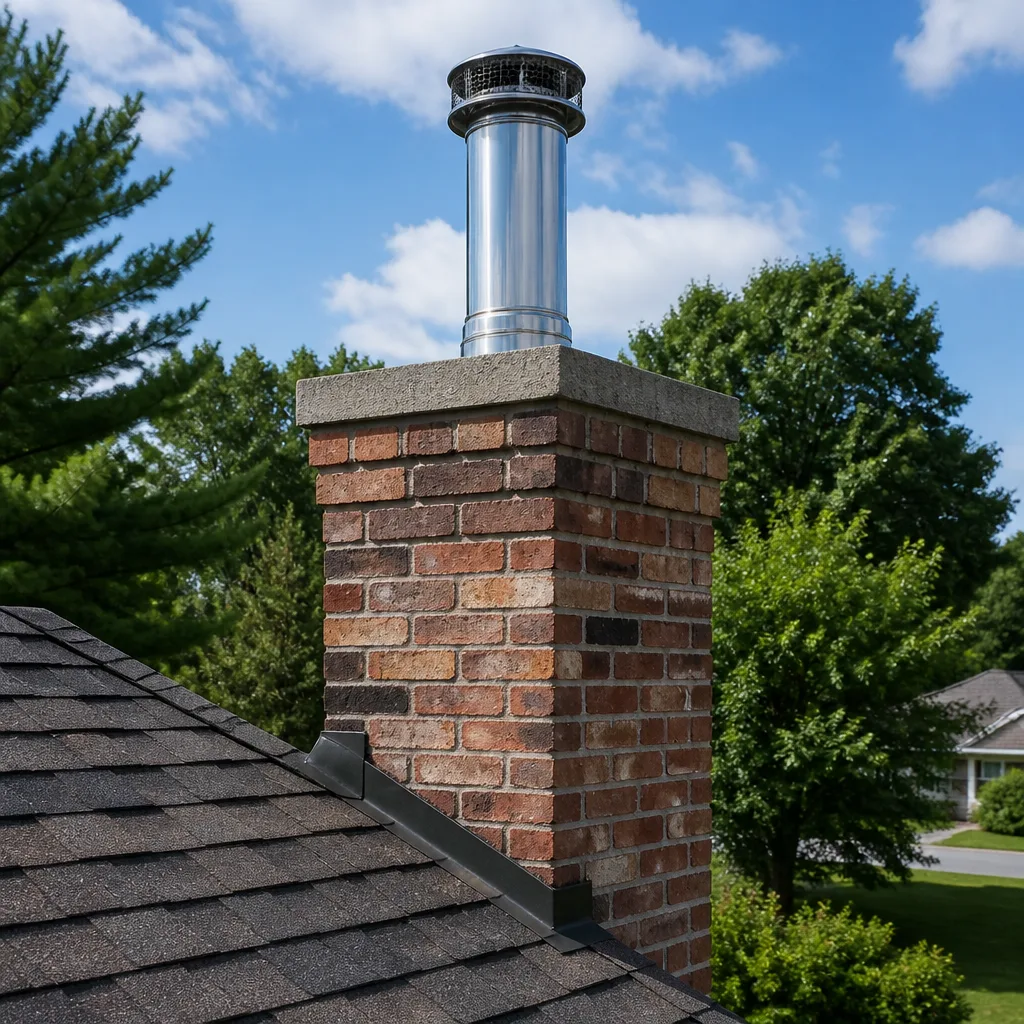 Flue relining
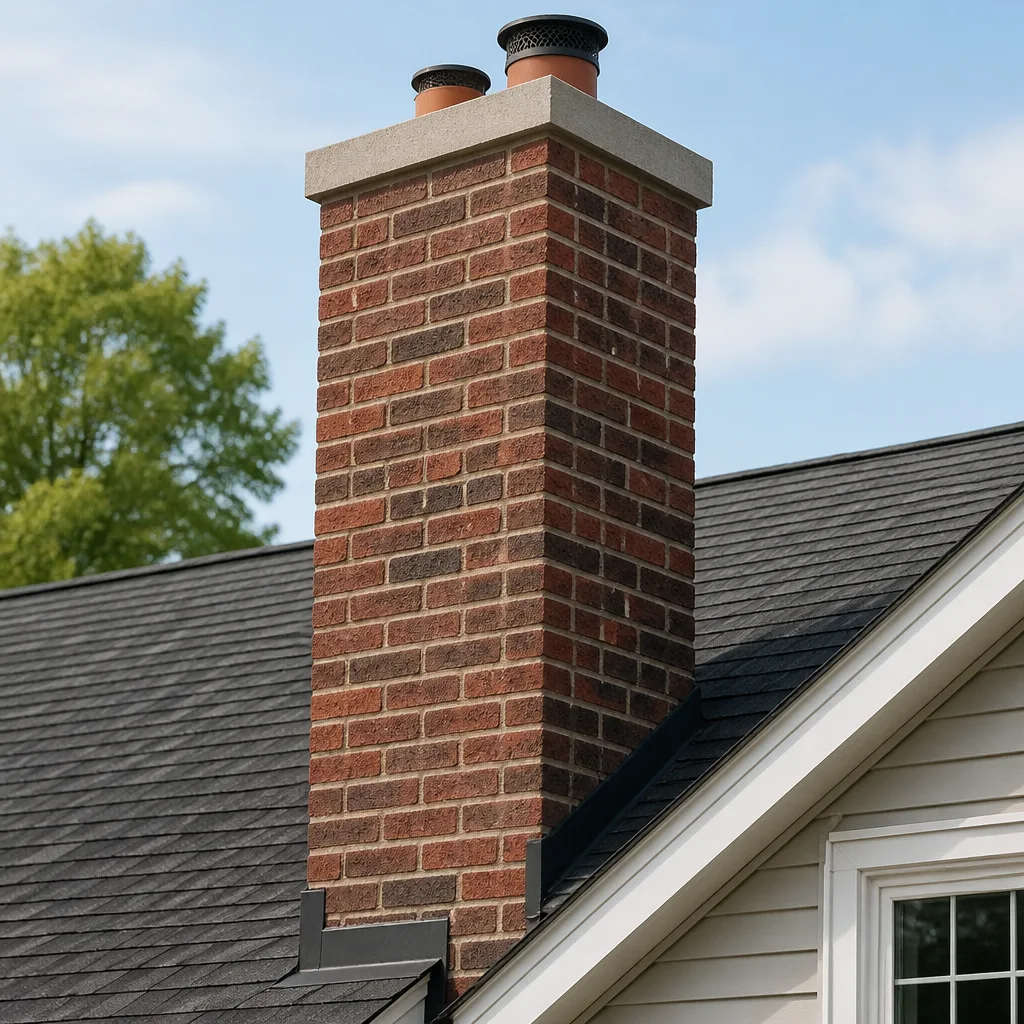 Masonry repair
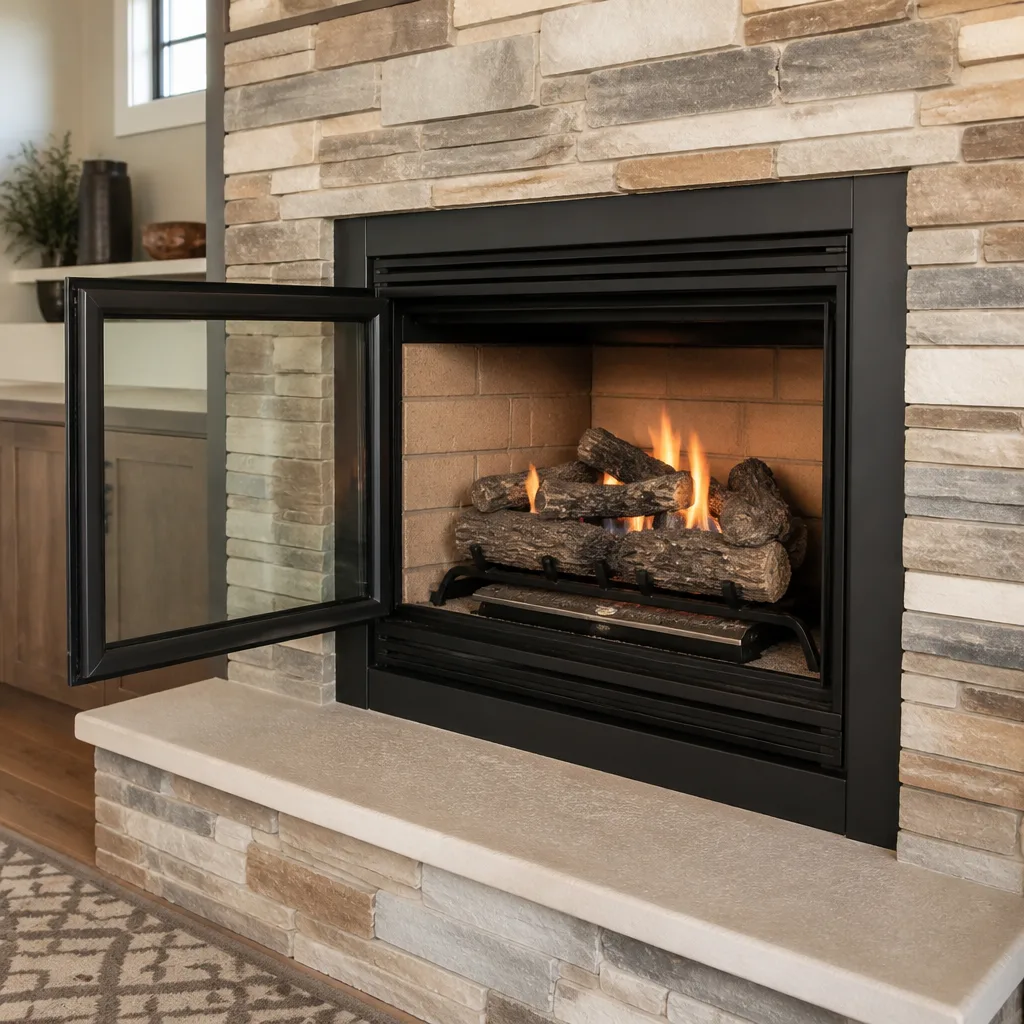 Gas fireplace service
Level 1 sweep and inspection to the NFPA 211 annual standard - flue, crown, cap, and flashing checked and photographed
Chimney sweep logs do not sweep chimneys. They loosen some creosote - which then falls where a brush and vacuum still have to collect it.
Choosing the Right Chimney Cleaning Brand: A Buyer’s Guide for Peralta Hills
Most homeowners never ask what brand of mortar, liner, or sealant is going on their chimney. That single unasked question is why some repairs hold for two years and others hold for twenty. A sweep is a sweep, more or less, but a repair is a set of material choices, and those choices decide how the job ages in the heat and dry air of Peralta Hills. In this guide we walk through what the professionals use, why it matters more for repairs than for cleaning, how to ask a contractor about materials without sounding like you’re cross-examining them, and what the answers actually tell you about how they work.
Quick Answer
The brand of materials a chimney contractor uses is the clearest signal of how they approach the work. Professionals who specify recognized industry brands – HeatShield for liner resurfacing, DuraFlex and Olympia Chimney for stainless flexible liners, Gelco and Famco for caps and crowns – are building repairs meant to survive thermal cycling. Generic materials often produce a repair that looks finished but fails early. Ask for brand names and written specifications before you approve any structural work in Peralta Hills.
Styles & brands we work with
- Sweep & inspection
- Caps & crowns
- Flue relining
- Masonry repair
- Gas fireplace service
Table of Contents
- Why Brand Matters More for Chimney Repairs Than for Cleaning
- Professional-Grade Sealants Versus Hardware Store Alternatives
- HeatShield and Smoke Chamber Resurfacing: What It Is and When It Fits
- Flexible Liner Systems: Stainless Grade, Warranty, and Installation Method
- Caps and Crowns: The Products That Prevent the Next Repair
- How to Ask a Contractor About Their Materials
- Where Brand Specification Is Non-Negotiable
- Peralta Hills Context: Climate, Aging Chimneys, and What Fails First
Why Brand Matters More for Chimney Repairs Than for Cleaning
Cleaning is a process, not a product. A brush is a brush; what matters in a sweep is technique, containment, and whether the technician inspects what they just cleaned. Repairs are the opposite. Every structural repair is a stack of material decisions – the mortar, the sealant, the liner, the crown mix – and each one has a service life. When a contractor reaches for a known professional brand, they’re choosing an item with a published spec sheet, a warranty trail, and a track record under heat. When they reach for whatever the local hardware store stocks, the repair is a guess.
In Peralta Hills, our technicians have up to 14 years of experience, and in that time we’ve seen the same pattern repeat: the failure isn’t dramatic. It’s quiet. A crown that looked solid turns chalky and cracks. A smoke chamber wash that seemed smooth blisters and flakes. A liner joint loosens because the sealant wasn’t rated for the temperature swings of a wood fire and a cool evening in the same week. None of these are the contractor’s intentions – they’re the material’s limits showing up on schedule.
The reason this matters so much here is that Peralta Hills chimneys live through a specific thermal cycle. A fireplace gets used in the cool months, sits cold in summer, and the masonry expands and contracts with each fire and each overnight cooldown. Materials rated for that cycle hold. Materials rated for general construction use don’t. Ask the brand question before work starts, not after it fails.
- Sweeping: process and skill, minimal material brand sensitivity.
- Sealants and mortar: brand specification matters, because thermal rating is the whole game.
- Liner resurfacing: brand and certification matter, since the product is the repair.
- Flexible stainless liners: grade, wall thickness, and warranty terms vary by brand.
- Caps and crowns: brand and material selection decide how long weather protection lasts.
Professional-Grade Sealants Versus Hardware Store Alternatives
A chimney sealant has one job: hold a joint or a crown edge together while the surface underneath it expands and contracts with every fire. Hardware store caulk is usually formulated for windows and trim – a narrow temperature band, mostly exterior weather, no direct flame or hot-gas exposure. It goes on cleanly and looks right. Then the first few burns of the season cycle it, and it lets go at the edges.
Professional chimney sealants are made for the range a chimney actually sees. On a Peralta Hills chimney, that range is wider than people expect. A cold morning fires up, the flue and crown heat quickly, and by evening the whole assembly is cool again. The material has to flex with that. The brands we specify for crown and masonry work are chosen for that specific property – not because they’re expensive or rare, but because the manufacturer publishes a temperature rating and a service expectation you can hold them to.
What you should see on a professional quote for sealant or crown work:
- A named product or brand, not just “chimney sealant.”
- A statement of what it’s rated for – crown and masonry, flue, or exterior.
- A surface preparation note. Sealants fail on dirty or damp surfaces, no matter the brand.
- A note on what happens if the joint is too wide for the sealant – usually a mortar repair first, sealant after.
That list is the difference between a repair you approve with confidence and one you hope works. If your contractor can’t tell you the brand of sealant they use on a crown, ask why. There’s rarely a good answer.
HeatShield and Smoke Chamber Resurfacing: What It Is and When It Fits
HeatShield is a chimney resurfacing system. It rebuilds the inner surface of a flue or the smoke chamber – the sloped area above the firebox – with a cementitious material applied in layers and finished with a smoothing tool. It is not a liner replacement. It is a repair of the flue itself, and it exists for the situation where a flue has deteriorated but the surrounding masonry is sound.
That situation comes up often in Peralta Hills. Older chimneys – particularly those built before liners became standard – frequently have parged flues with broken joints, spalling, or a smoke chamber that was never properly shaped. A full stainless reline is one way to solve that. Resurfacing is another, and it’s less invasive: no demolition, no liner running the length of the flue, just a rebuilt inner surface extruded to a smooth finish.
When HeatShield is the right answer:
- The flue is sound at the structural level – no cracks through the masonry itself.
- The deterioration is at the surface, with joints, parging, or the smoke chamber.
- The flue is roughly the right size already. Resurfacing slightly reduces the effective diameter.
- The homeowner wants a repair tier between “monitor it” and “full reline.”
When it isn’t the right answer: when the flue has lost structural integrity, when offsets or transitions make the tooling impractical, or when a dedicated stainless liner is the sounder engineering call. That’s a judgment made after the camera inspection, not over the phone. We use HeatShield because it’s a known system with a defined application method – and because we’ve seen it hold up. It requires a specific skill set that most sweep-only operators don’t have, so don’t expect a call-out-and-clean operation to offer it.
Ask the contractor two questions before approving resurfacing. First, what’s the method – cement mix, tooling, and finish? Second, what does the warranty cover, and who honors it? A good answer is specific. A vague answer is a red flag.
Flexible Liner Systems: Stainless Grade, Warranty, and Installation Method
A flexible stainless liner is the workhorse of relining. It runs the length of the flue, connects the appliance to the termination at the top of the chimney, and takes the products of combustion where the original flue lining once did. Two jobs that specify brand and grade will produce very different long-term results.
Stainless grade
Liner stainless comes in different alloys, and the alloy matters. A wood-burning fireplace and a gas appliance don’t produce the same exhaust chemistry, and a liner rated for one isn’t automatically rated for the other. A professional liner is specified to the appliance. A generic “stainless liner” without a stated grade is a liner where nobody wrote down what it’s rated for.
Wall thickness
Thinner walls bend more easily during installation but dent more readily during a later sweep. Thicker stainless costs more and installs harder. Most brands offer both, and the spec sheet tells you which you’re getting. Insist on it in writing.
Installation method
The two main approaches are direct-connect and full-length with an insulation wrap. Insulated installation with the correct material improves draft and reduces creosote formation on the liner wall. Skipping the insulation is faster and cheaper, and often has consequences down the line. Ask whether the liner will be insulated and with what.
Warranty terms
Warranties differ by brand in three key ways: length, what voids them (sweep method, appliance change, chimney fire), and whether they cover labor or only the material. A manufacturer’s material warranty that doesn’t cover the labor to replace it is only half a warranty. Ask what the total coverage is, not just how many years.
We specify brands like DuraFlex and Olympia Chimney for flexible relining because the grade, thickness, and warranty terms are documented and the manufacturer stands behind them. When we quote a reline, the brand and grade go on the written estimate.
Caps and Crowns: The Products That Prevent the Next Repair
Chimney caps and crowns are the weather-barrier line of the trade. A crown is the sloped concrete (or equivalent) at the very top of the chimney, shed water away from the masonry. A cap is the enclosure above the flue opening that keeps rain, animals, and debris out while allowing exhaust to escape. Both do their job for years on a single installation – or fail in a season if they’re the wrong product.
Crowns fail in three predictable ways. The mix is too thin and chalky and cracks. The slope is inadequate and water pools. Or the sealant at the edge wasn’t rated for masonry, and it lets go the first hot season. A properly specified crown crown – a durable, correctly sloped mix applied to a prepared surface with a rated sealant – is a fifteen-year product. A poorly specified one is a five-year product, and its failure is what often gets misdiagnosed as “chimney is falling apart.”
Caps are the same story at a smaller scale. A well-made stainless cap with proper mesh sizing for the flue and appliance type will outlast several alterations to the chimney below it. A bent, cheap cap that doesn’t fit properly lets weather in and doesn’t reliably keep animals out. Brands Gelco and Famco produce caps in the professional tier with documented sizing and material; that’s why we use them for our chimney cap & crown work.
Reasons to look at your cap and crown along with the next sweep:
- Visible cracks, chalky surface, or a slope that’s lost its pitch.
- A cap that’s loose, bent, or has mesh that’s rusted through.
- Water staining on the firebox interior after a rain event.
- Animals or debris found in the flue during the sweep.
How to Ask a Contractor About Their Materials
Most homeowners worry that asking a contractor what product they use will come across as second-guessing them. It won’t – not with a professional. Materials questions are standard in every trade, and in the chimney trade they’re the difference between a documented repair and a guess. The key is asking inside the estimate conversation, not as a challenge before the work.
Here’s a way to frame it that keeps it simple and gets a real answer:
- Start with the estimate. Ask, “Do you put the brand and grade of the materials on the written estimate?” A professional does. It’s how they hold themselves accountable.
- Ask what problem the product solves. “What’s this sealant rated for, and why that one over a general masonry product?” The answer should include a temperature or use rating.
- Ask about installation method. “Will the liner be insulated? What’s the tooling method on the resurfacing?” This separates the practitioners from the order-takers.
- Ask about the warranty. “What does the manufacturer cover, and what does your labor coverage look like after that?” A good answer names both.
- Ask about follow-up. “How do I know the repair held – and what do we do if it doesn’t?” A good contractor tells you before you ask.
Notice none of these are confrontational. You’re asking for the spec the contractor should already have. Answers that name brands and specs are reassuring. Answers that stay general – “we use the best,” “professional grade,” “industry standard” – are telling you that the contractor either doesn’t know or doesn’t want you to know. Both are reasons to get a second estimate.
What the answers reveal, in short:
- Names a brand and spec: has done the work before, stands behind it.
- Names a grade without a brand: may be sourcing from whoever’s cheapest this week.
- Refuses to specify in writing: will be difficult if the repair fails.
- Offers to show you the old material after removal: excellent sign, and something we do.
Where Brand Specification Is Non-Negotiable
Some parts of chimney work are essentially brand-agnostic. Cleaning is the clearest example: a sweep done to standard is a standard job. Structural and safety-related repairs are the opposite – brand specification is where the work stands or falls. The matrix below lays out where a generalist can get away with generic materials, and where doing so is a real risk.
| Work type | Brand specification importance | Why |
|---|---|---|
| Routine sweep | Low | Process and technique, not material |
| Inspection (camera) | Low-moderate | Camera quality helps, but judgment is the skill |
| Crown sealant | High | Thermal cycling destroys hardware store caulk |
| Crown rebuild | High | Mix integrity governs lifespan |
| Cap installation | Moderate-high | Sizing, material and mesh matter |
| Smoke chamber resurfacing | Very high | The product is the repair; HeatShield specifically |
| Flexible stainless reline | Very high | Alloy, thickness, and warranty are the safety case |
| Firebox rebuild | High | Refractory materials have performance grades |
| Structural masonry repair | High | Mortar mix has to match surrounding masonry |
If you’re paying for a repair, the product is the repair. In Peralta Hills, we specify brand and grade on the estimate because we’ve seen materials fail early enough to want a paper trail we can point to. Our fireplace repair work runs on the same principle: the firebox mortar, the refractory panel, and the smoke chamber finish have to be the right material for the application, or the repair is a guess dressed as a fix.
Peralta Hills Context: Climate, Aging Chimneys, and What Fails First
Peralta Hills is a canyon-and-hills community with ranch-era housing stock, and that combination produces specific chimney issues. Mild, dry winters mean fireplaces get used steadily through the cool months but rarely sit out a full cold season. The houses themselves range from genuinely old – with the parged-flue construction common in mid-century builds – to later additions with masonry chimneys that have aged through several decades of thermal cycling.
What fails first in this housing stock, in our experience:
- Crown edges and shoulders. The first surface to weather, and the first repair most homes need.
- Smoke chamber parging. On any chimney built before liners were standard, the smoke chamber surface is the weak point.
- Caps that have lost their mesh. Fine in dry weather, a problem in the first rain.
- Mortar joints on the above-roofline stack. Weather-facing joints take the most load.
The climate here is forgiving in some ways and unforgiving in others. Mild winters mean the chimney sits warm and cold in the same week, which is harder on sealants than a constant deep freeze would be. The dry summer months are actually the best time to look at the chimney – no fire in use, clear access, and time to plan any repair before the season starts. If you’re new to Peralta Hills and haven’t had the chimney looked at since you moved in, that’s the right first step. Know what’s inside before you light the first fire of the season.
For a routine assessment, our chimney sweep service begins with the camera – and the resulting report tells you what’s actually going on before any repair is discussed. From the firebox to the crown, the work stays in one place instead of being split across a sweep-only operator and a mason who’s never seen a flue.
Common Mistakes to Avoid
- Accepting “professional grade” as an answer. It isn’t a brand and it isn’t a spec. Ask for the product name and grade on the written estimate – if it’s not there, the repair has no paper trail.
- Letting a sweep-only operator quote a repair. A crew that cleans and leaves can’t specify, install, and warranty a liner or smoke chamber resurfacing. In Peralta Hills, this is the most common way homeowners end up with a big-ticket repair that no one stands behind.
- Skipping the camera inspection on a resurfacing quote. Resurfacing is appropriate only when the flue is structurally sound. A contractor who quotes HeatShield without showing you footage of the flue is guessing at your expense.
- Choosing the sealant by price. The cost of a professional sealant versus the discount alternative is a small fraction of the cost of reapplying the repair. Pay for the rating, not the tube.
- Ignoring the crown because the firebox looks fine. Most water damage in a chimney starts at the top and travels down. A crown in poor shape sends water into the exact materials the firebox depends on, and by the time you see the firebox damage, the crown has been failing for a while.
- Assuming a newer chimney needs no specification. Newer masonry chimneys are constructed with materials that still have grades and brands, and post-construction repairs should be specified to match the original build, not replaced with generic hardware store materials.
- Waiting for a problem to become urgent before asking about materials. The best time to ask a contractor about their brands is the annual inspection, not in a scramble after a chimney fire indicator or a visible crack.
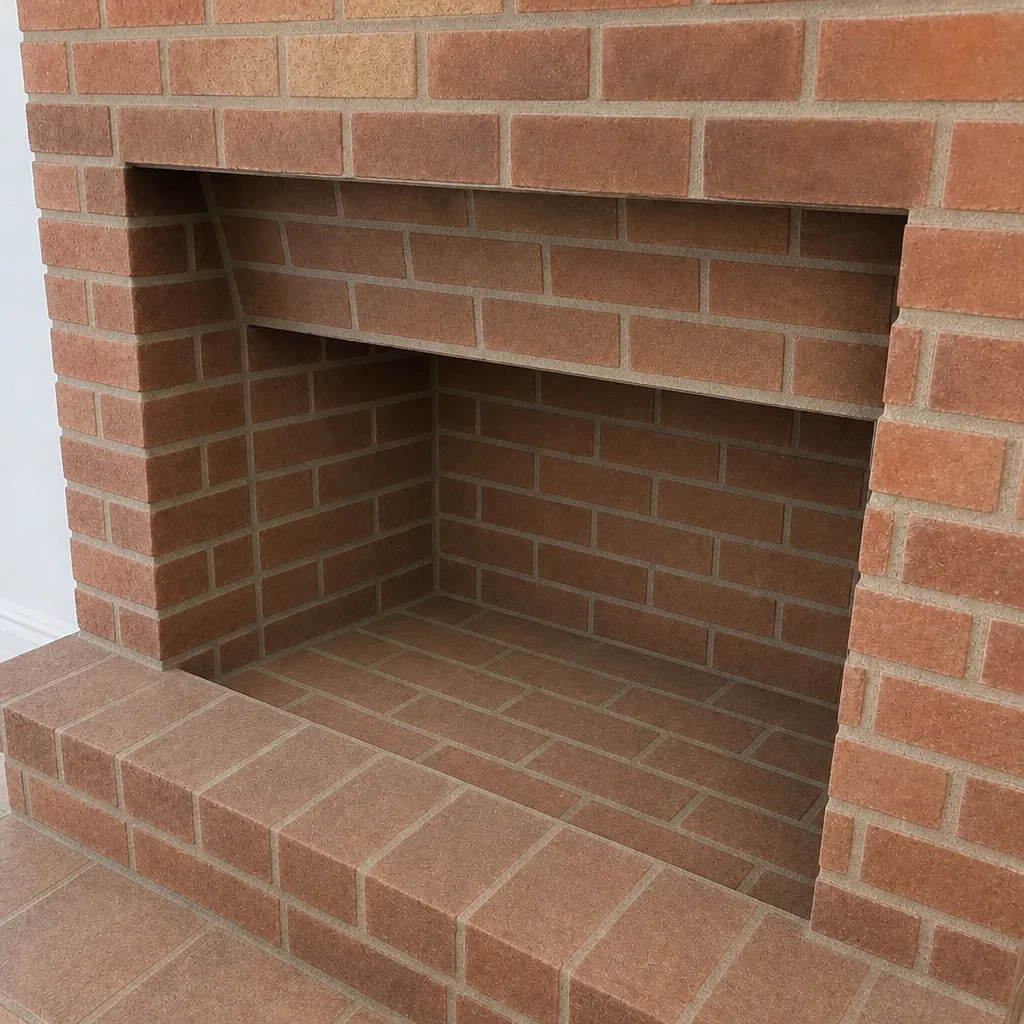
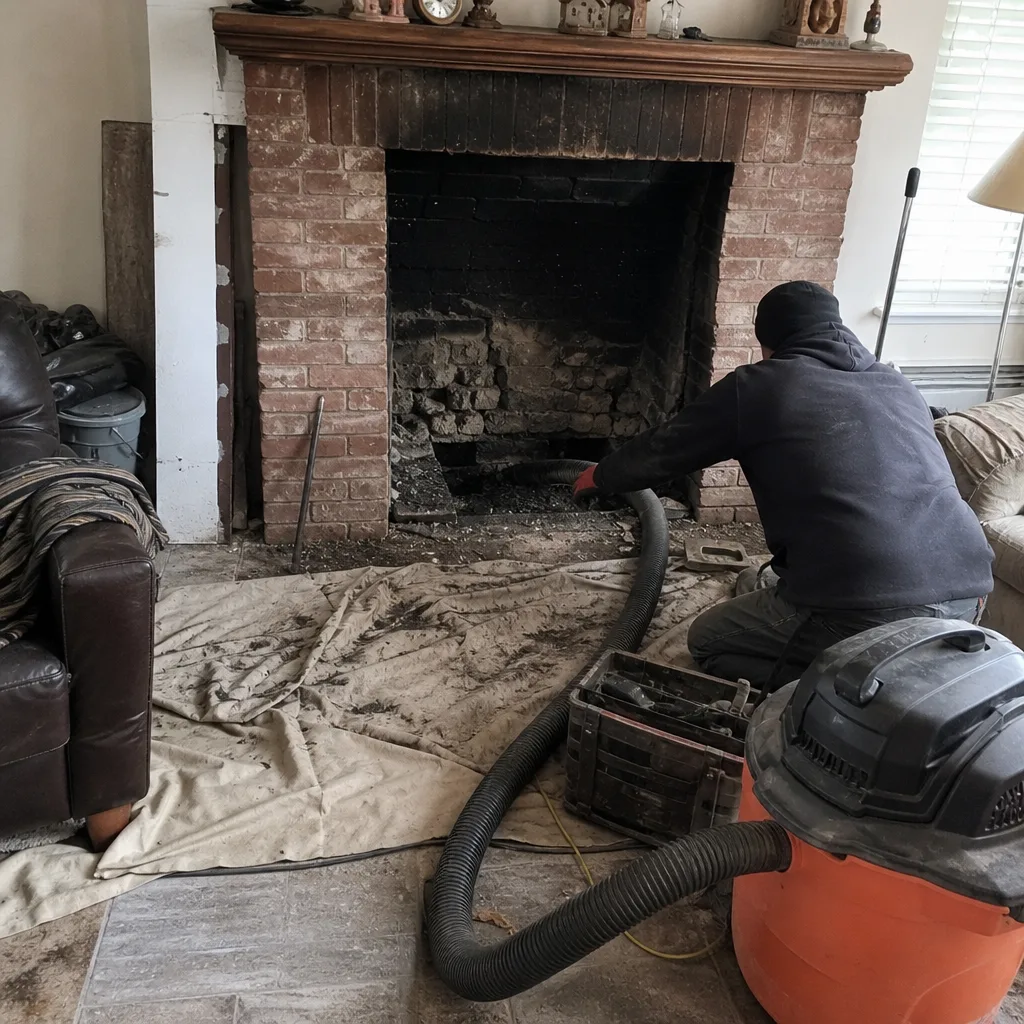
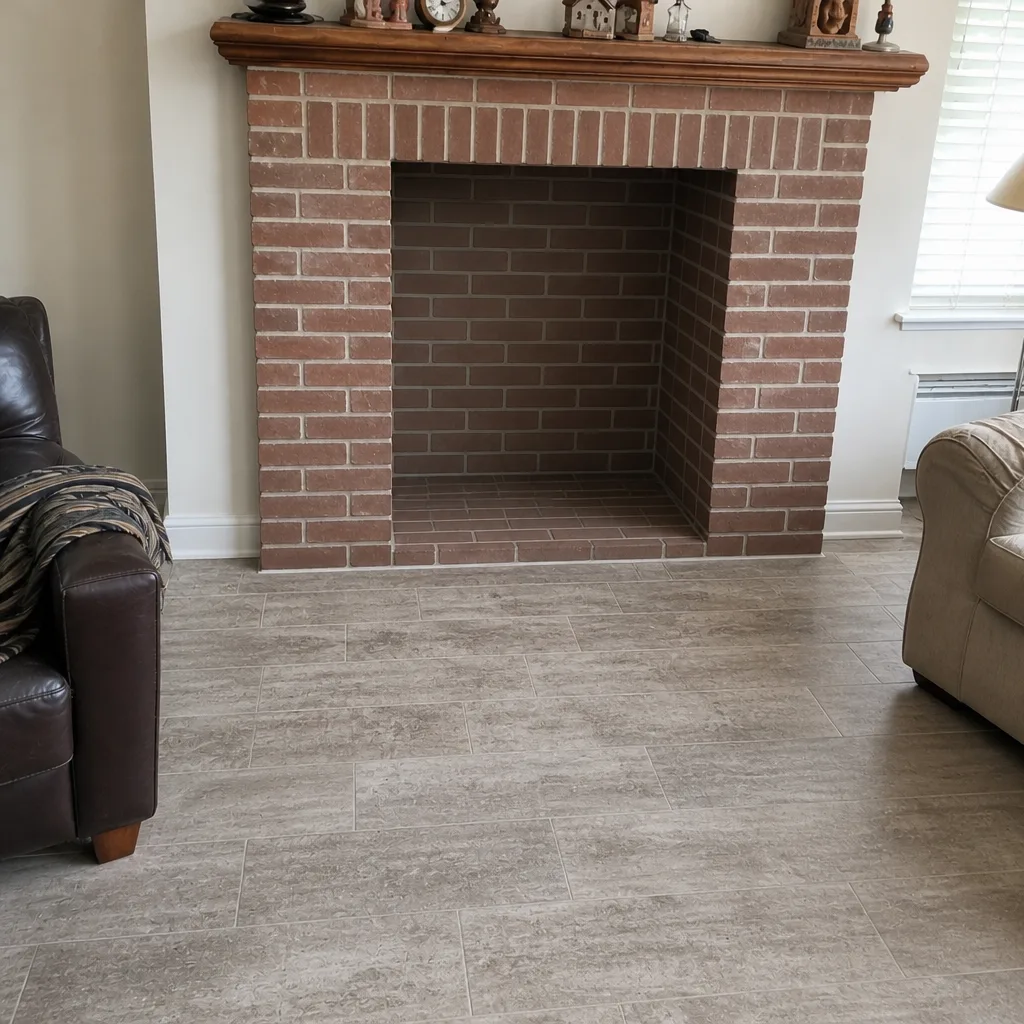
See the difference
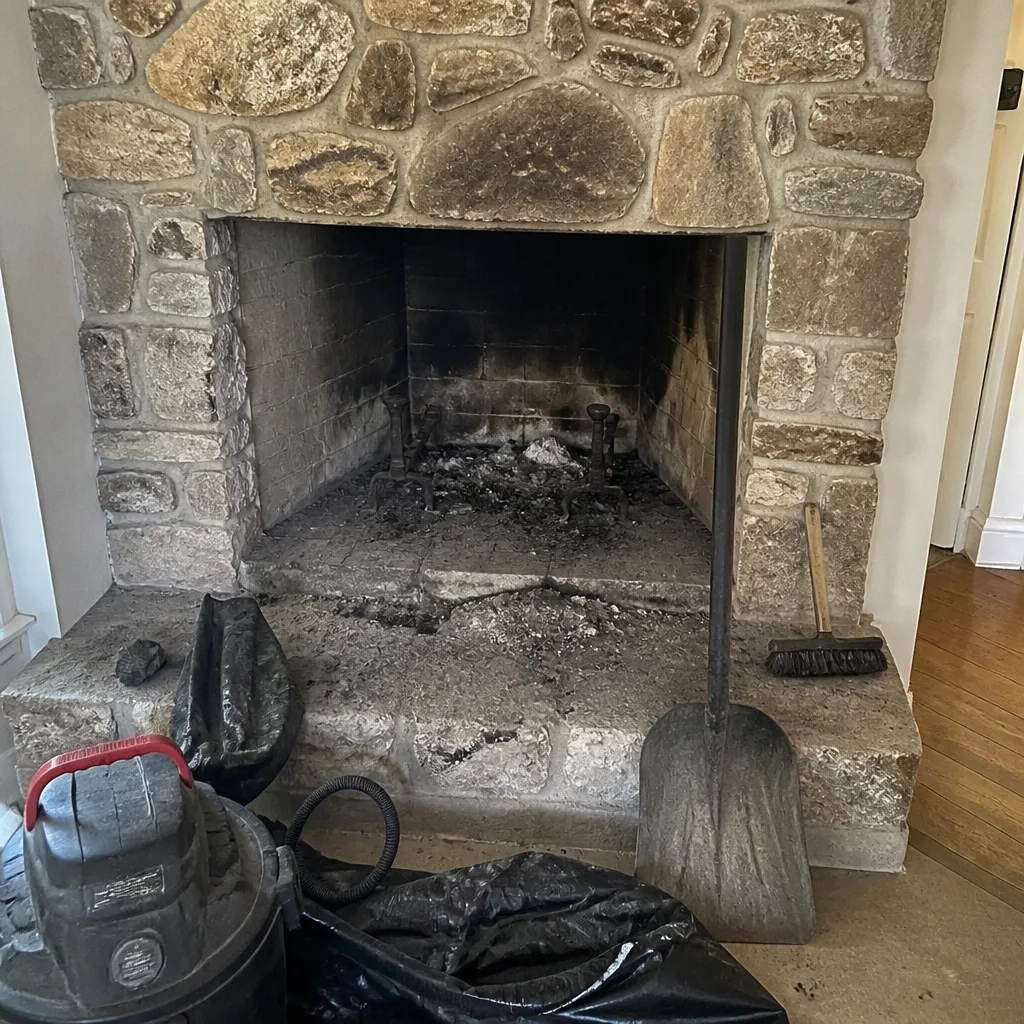 Before
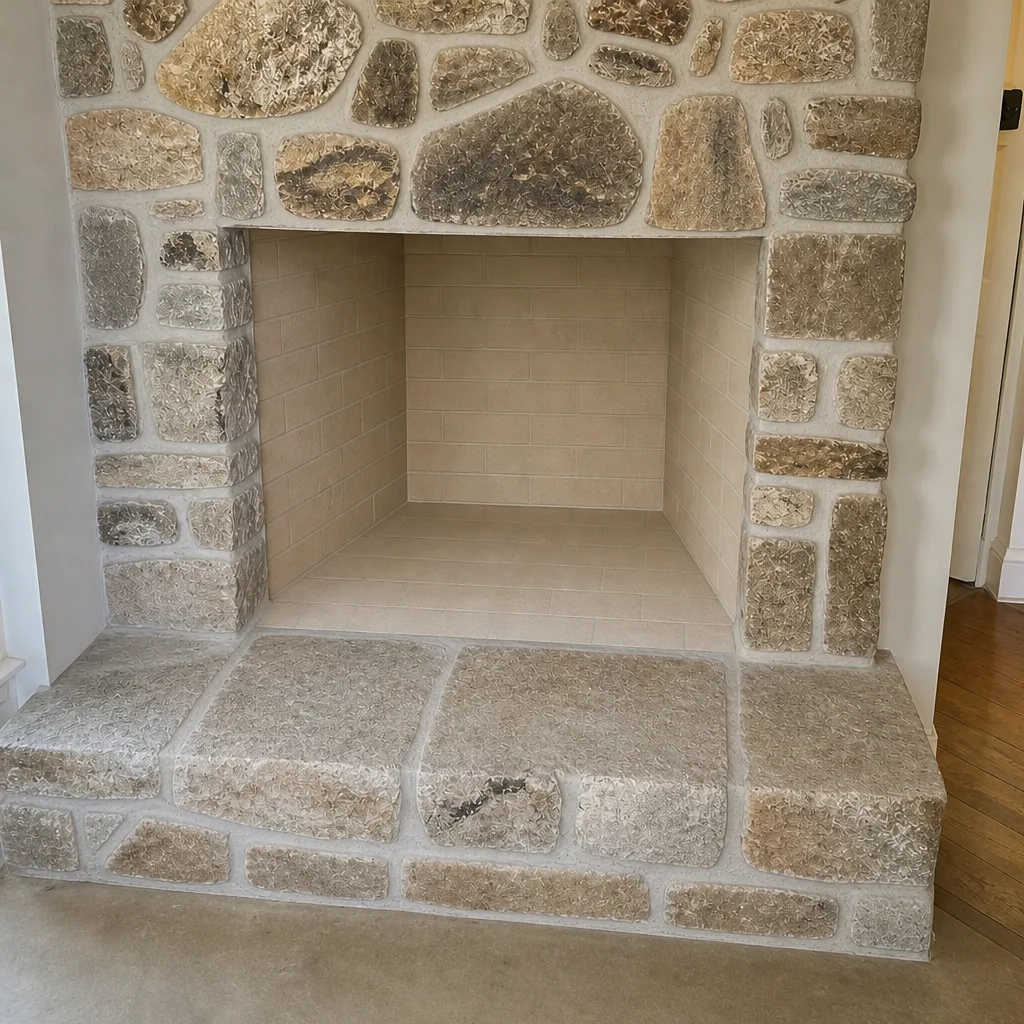 After
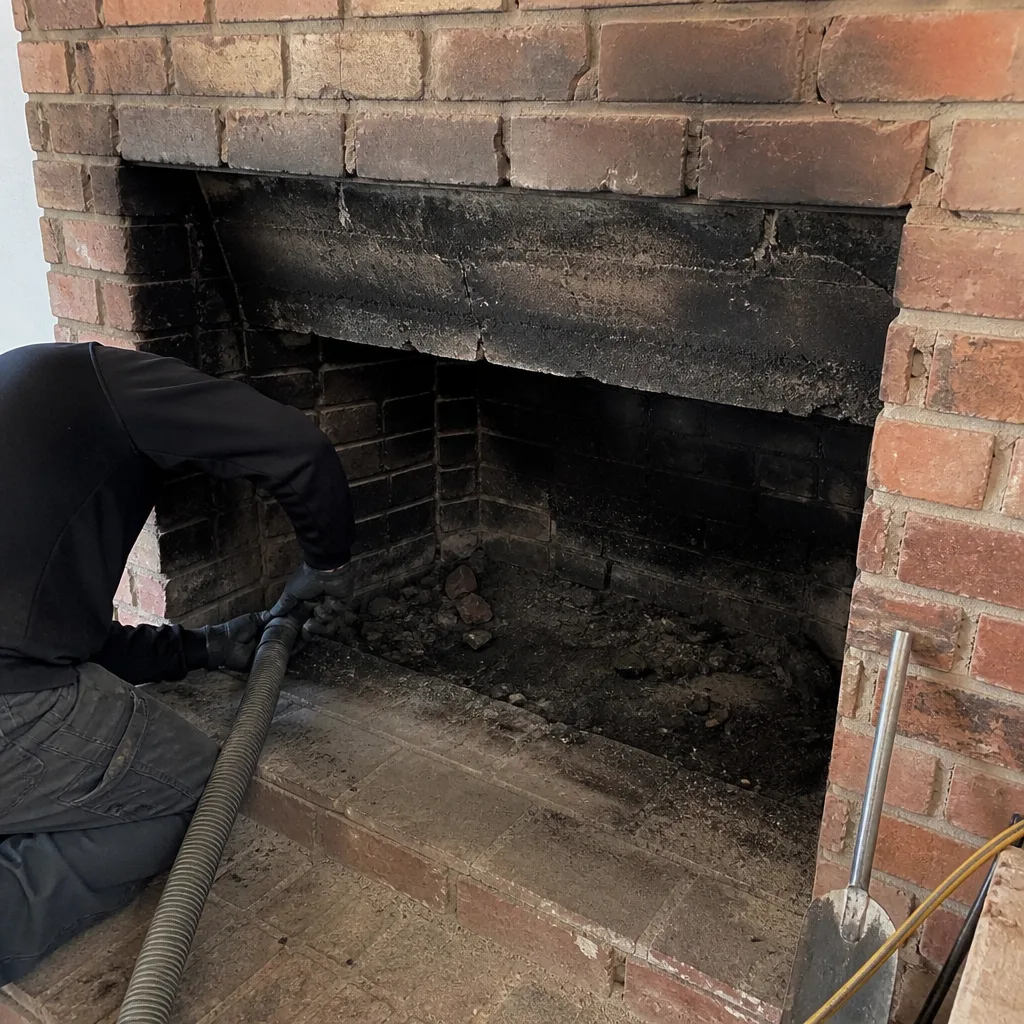 Before
 After
 Before
 After
When to Call a Professional
Some things can wait until the next scheduled sweep. Others shouldn’t. Call a professional if any of the following is true: the masonry above the roofline is visibly cracked or missing mortar; the firebox interior shows cracked parging, spalling brick, or white staining after a rain; the chimney cap is loose, bent, or missing; you smell smoke in the house on lighting a fire; or you’ve had a chimney fire indicator – a loud roar, a strong burning smell in the house, or puffed creosote at the top of the flue. Any of those mean the chimney needs a look before the next fire, not after.
Chimney Sweep Peralta Hills offers free estimates in Peralta Hills. We come out, sweep if needed, run the camera, and give you a written report with photos you can see for yourself – no recommendations without evidence. Call (877) 492-2418 for a free estimate. We answer 24/7, and fast dispatch runs from 7am to 7pm, Sunday through Friday. We’re closed Saturday.
Frequently Asked Questions
For a routine cleaning, no. A sweep is a process, and the quality of the job comes down to technique, containment, and whether the technician inspects what they’ve cleaned. Brand specification matters once a repair is involved – sealant, crown, liner, or resurfacing – because those repairs are made of the products the contractor chooses. If a repair estimate doesn’t name the product, ask before approving. Call (877) 492-2418 for an exact scope and quote – estimates are free.
HeatShield is a chimney resurfacing system that rebuilds the inner surface of the flue or smoke chamber without full replacement. Whether you need it depends on the camera inspection – it’s appropriate when the masonry around the flue is sound but the inner surface has deteriorated. It isn’t right for every chimney, and a contractor who quotes it without showing you the flue footage is guessing. Call (877) 492-2418 for a proper inspection and a straight answer.
The professional one has a stated temperature rating and a stated use. The cheap one usually says “exterior” or “general purpose” and lists windows and siding on the tube. Ask the contractor what brand they’re using and what it’s rated for. If the answer is “the same stuff we use on all our repairs,” that’s not a spec. Call (877) 492-2418 for an exact quote on your sealant and crown work.
Yes, and the grade matters a great deal. Flexible stainless liners differ in alloy, wall thickness, insulation method, and warranty terms, and a liner rated for a wood-burning fireplace isn’t automatically rated for a gas appliance. Ask for the brand, grade, and insulation spec in writing before approving a reline. Call (877) 492-2418 for a written reline specification – estimates are free.
Choose the contractor who names the brand. A written spec is a commitment you can hold them to if the repair fails; a vague promise isn’t. This is especially true in Peralta Hills, where the canyon climate and aging housing stock put a real load on materials. Ask for the brand on every repair line. Call (877) 492-2418 if you want a written estimate that names the products.
Every year, along with the sweep. The crown and cap are the weather-barrier line and they age faster than the masonry below them. A quick look at the top of the stack during the annual sweep catches most crown and cap issues before they turn into water damage inside the chimney. Call (877) 492-2418 to book a sweep and a top-to-bottom look – estimates are free.
The Bottom Line
Brand specification is the clearest way to tell a real chimney professional from a generalist. On a sweep, it barely matters. On a repair, it’s the difference between a fix that survives a few thermal cycles and a fix that doesn’t. Ask for the product name on every repair line, ask for the grade on any liner, and ask how the warranty works. HeatShield for resurfacing, DuraFlex and Olympia Chimney for liners, Gelco and Famco for caps and crowns – these aren’t logos on a website. They’re the materials that hold up on a Peralta Hills chimney. Chimney Sweep Peralta Hills connects you with independent local professionals for chimney sweep, inspection, cap and crown, fireplace repair, and chimney repair – the full lifecycle, from the firebox to the crown, one specialist instead of three. To explore the full range of services, start at Chimney Sweep Peralta Hills. Call (877) 492-2418. We answer 24/7, and fast dispatch runs from 7am to 7pm, Sunday through Friday. We’re closed Saturday.
Written by the team at Chimney Sweep Peralta Hills.