
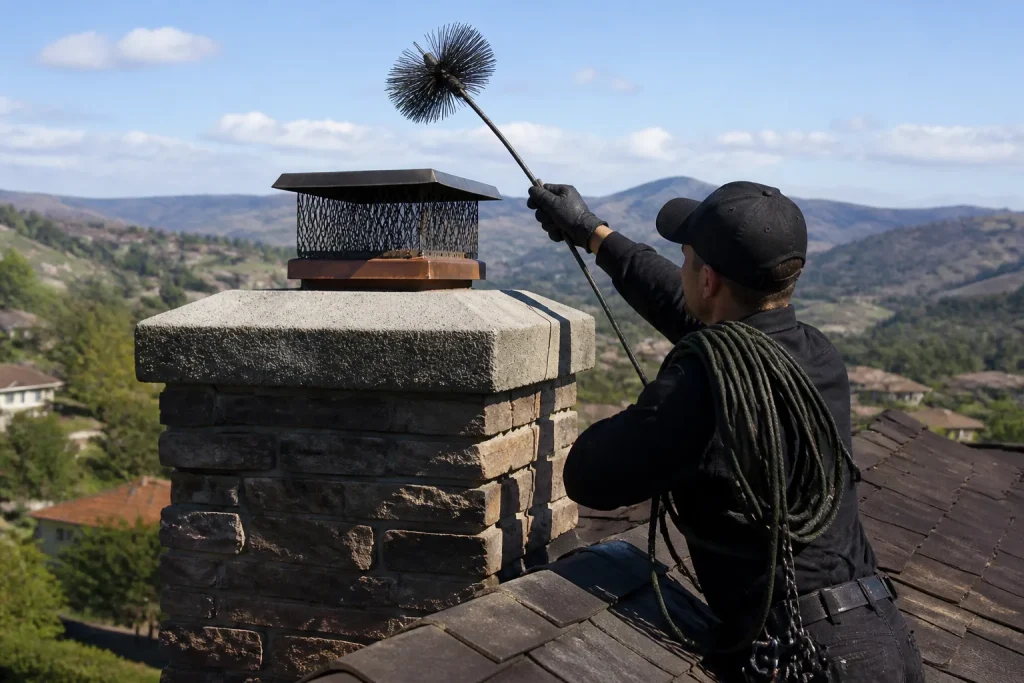
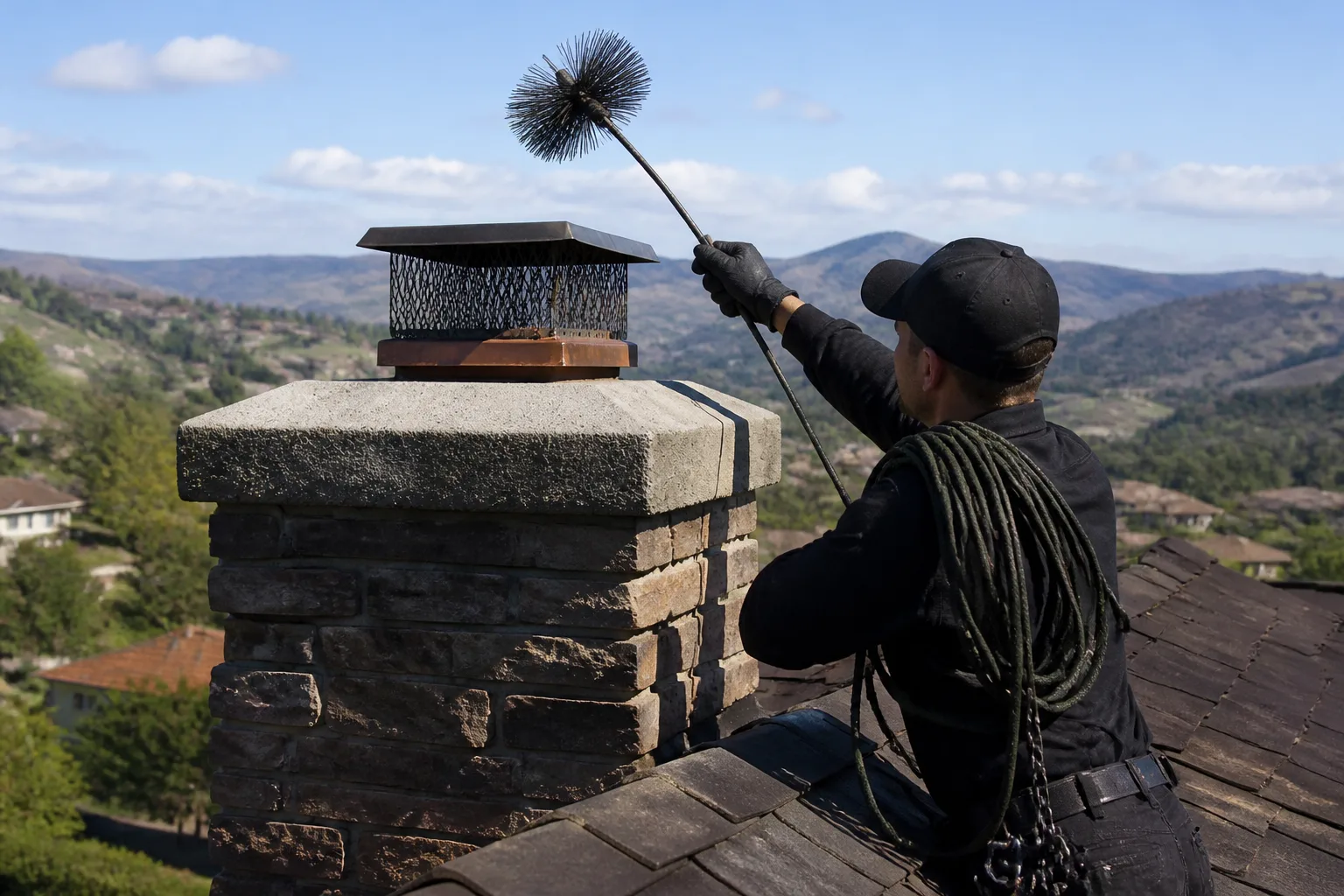
Top Signs You Need Chimney Cleaning Service – Don’t Ignore These
Creosote doesn’t smell like a problem until it’s already a hazard. By the time you notice a tar-like odor drifting from the fireplace, you’re usually past “schedule a cleaning” and into “schedule an inspection.” That gap between what you can sense and what’s actually happening inside the flue is where most chimney trouble lives, and it’s why the single most important sign you need chimney cleaning service is simply that a year has passed since the last one. If you’d rather not climb up there and guess, call (877) 492-2418 and we’ll take a look.
Key Takeaways
- The most dangerous conditions – Stage 3 glazed creosote and cracked liners – often show no warning at all.
- Signs you can observe (odor, smoke behavior, visible buildup) differ from signs only an inspection reveals.
- Some warnings mean stop using the fireplace now; others can wait for your scheduled appointment.
- Peralta Hills’ concentrated winter burn pattern builds creosote faster than light year-round use.
- Annual service is a liability backstop, not a maintenance preference.
What are the warning signs you need a chimney cleaning?
The clearest signs you need a chimney cleaning are a strong tar-like or smoky odor from the fireplace even when it’s cold, smoke that rolls back into the room instead of drawing up the flue, a visible crust of buildup on the firebox walls or damper, and a flue that produces less draft than it used to. Any one of these is your cue to book a sweep, not to light another fire and hope it clears.
Here’s what each of those signs is actually telling you about the inside of your chimney:
- Tar-like odor: creosote has built up enough that it’s off-gassing. The stronger the smell, the further along the buildup has gone.
- Smoke rolling back: the flue is partially restricted or the draft is compromised, often by soot, creosote, or a blocked cap.
- Visible crust on firebox walls: that’s creosote in its early stages. Left alone, it hardens and glazes.
- Weak draft and sluggish fires: reduced airflow means the flue is narrowing from the inside.
- Black staining around the firebox or damper: smoke is escaping where it shouldn’t, which is both a draft problem and an indoor air quality concern.
We use these observable clues as a starting point, but they don’t tell the whole story. In our experience, the signs homeowners can spot themselves are the loud ones. The quiet ones matter more, and they’re covered below.
The signs you can’t see: what only an inspection reveals
The most serious chimney conditions produce no visible warning at all. Stage 3 glazed creosote – the hard, shiny, tar-like deposit that fuels chimney fires – forms on the inside of the flue where no homeowner can see it. Liner cracks, gaps at the flue joints, and deteriorated mortar are just as invisible from the hearth. This is why waiting for a symptom is itself the mistake, and why a professional inspection matters as much as the sweep.
During an inspection, a technician is looking at conditions you can’t reach:
- Glazed creosote on the flue walls – the flammable deposit that a routine brushing may not remove.
- Cracks or gaps in the liner – the barrier between your flue gases and the structure of the chimney.
- Deteriorated mortar joints inside the flue, which loosen and can allow heat to reach combustible material.
- A damaged or missing cap letting water, animals, and debris into the flue.
- Crown cracks that allow water to seep into the chimney structure.
These are exactly the findings that give relining and resurfacing work its purpose. When a liner is deteriorating but not fully failed, we can apply HeatShield, a certified chimney resurfacing system used to restore the flue without full replacement. When the flue needs a flexible stainless liner, we install DuraFlex because it’s a professional-grade system built for that job. You won’t know which applies until someone looks. That’s the point.
Which signs mean stop using the fireplace immediately?
Stop using your fireplace immediately if you smell a strong creosote odor combined with smoke backing into the room, if you’ve had a chimney fire (even a small one you think went out), if you see cracked or crumbling flue tiles, or if the firebox or damper shows heavy glazed buildup. These are safety conditions, not scheduling notes. A chimney fire can damage the liner in ways you can’t see, and a compromised liner lets heat and carbon monoxide reach where they shouldn’t.
Other signs can safely wait for your scheduled appointment while you keep burning lightly:
- A mild smoky smell when the fireplace is cold.
- Slightly sluggish draft on a cold start.
- Light soot staining near the damper.
- A cap that’s clearly damaged but the flue itself is drawing normally.
Carbon monoxide is the reason we treat the “stop now” signs seriously. A blocked or damaged flue can push combustion gases back into the living space, and CO gives no warning of its own. If anything on the immediate-stop list applies to your Peralta Hills home, don’t light another fire until it’s been checked.
Why Peralta Hills’ burn pattern builds creosote faster
Peralta Hills winters are mild, which sounds like it should mean less creosote. It doesn’t. What matters is how the fireplace is used, not the outdoor temperature. Most households here burn in a concentrated winter window – a fire most evenings from late fall through early spring, then nothing for months. That pattern loads the flue with creosote quickly during the burn season, and then leaves it sitting there through the long off-season, where it hardens and glazes.
A home that burns lightly year-round spreads the same total accumulation over twelve months, so the flue rarely reaches a dangerous thickness. A Peralta Hills home that burns hard for four months can hit that same thickness in a fraction of the time. Mild climate doesn’t slow creosote down; the concentrated schedule speeds it up.
The practical consequence is that “I only burn in the winter” is not a reason to skip annual service. It’s the reason to keep it. When the season ends, that’s the ideal time to clean the flue while the deposits are still softer, before they glaze over the summer. From the firebox to the crown, we handle it all, which means a sweep and any cap or crown work happens in the same visit rather than across two contractors. We install and work with Olympia Chimney caps and Famco components because we want weatherproofing done with materials we can stand behind, not a generic substitute.
Annual service is a liability backstop, not just maintenance
Annual chimney service is less about tidiness and more about documentation and liability. If a chimney fire or carbon monoxide incident ever occurs, a record of regular professional inspections is your proof that you maintained the system. For anyone selling a home in Peralta Hills, or buying one, an inspection aligned with NFPA 211 levels is the standard a buyer’s inspector and your insurer will expect to see.
That’s why we offer inspections as a standalone service, not just a freebie tacked onto a sweep. A pre-sale inspection, a post-chimney-fire assessment, and an annual check each answer a different question, and each is worth having on paper.
Here’s the honest version of the annual-interval argument: a sweep isn’t a guarantee your chimney is safe, and skipping one isn’t proof it isn’t. What a yearly inspection gives you is a baseline. You know what condition your flue was in last year. You can see whether buildup is accelerating, whether a small crack has widened, or whether that cap took a hit from a falling branch. Without the baseline, every problem is a surprise, and surprises with chimneys tend to be expensive.
When to call a pro
Call a professional when any observable sign appears, when a year has passed since the last sweep, or when you’ve just bought a Peralta Hills home and don’t know its chimney history. Know what’s inside before you light the first fire of the season. Our technicians have up to 14 years of experience reading exactly these conditions, and we can tell you plainly when work can safely wait.
One call, one specialist means the sweep, the inspection, the chimney cap & crown, and any fireplace repair all come from the same company. If the inspection turns up a problem, you’re not sent looking for a second contractor.
Related services in Peralta Hills
If the signs above sound familiar, start with a chimney sweep and let the inspection guide the rest. You can also learn more about Chimney Sweep Peralta Hills and how we work.
The Bottom Line
The signs you can see – odor, smoke rolling back, visible crust – are useful because they’re easy to notice. The signs you can’t see are the ones that cause real harm. Stage 3 glazed creosote and cracked liners don’t announce themselves, which is why the strongest sign you need cleaning is that it’s been a year. In our experience, the homeowners who schedule annually spend less and worry less, because nothing catches them by surprise. If you’re in Peralta Hills and need help, Chimney Sweep Peralta Hills offers free estimates – call (877) 492-2418. We answer 24/7, with fast dispatch from 7am to 7pm, Sunday through Friday. A quick word on scheduling: our crews are closed on Saturday, but a fire that fails on a Saturday, like a smoke alarm going off for no reason, is usually just your chimney reminding you it wants attention on Sunday. We answer 24/7. A call outside dispatch hours is booked into the next opening, Sunday through Friday, 7am to 7pm.
Frequently Asked Questions
Once a year for most wood-burning fireplaces, and more often if you burn hard through the winter or notice any of the observable signs above. Annual cleaning keeps creosote from reaching dangerous thickness and gives you a yearly record of the flue’s condition. Call (877) 492-2418 for an exact quote – estimates are free.
Creosote keeps building and hardens into a flammable, glazed deposit that routine brushing can’t always remove. The liner stays under stress, cracks go unnoticed, and the risk of a chimney fire or carbon monoxide intrusion rises. Call (877) 492-2418 for an exact quote – estimates are free.
You can spot odor, smoke rolling back, visible crust on the firebox walls, and weak draft. What you can’t see is glazed creosote, liner cracks, and deteriorated mortar, and those are the conditions that matter most. That’s why the observable signs are a starting point, not the answer. Call (877) 492-2418 for an exact quote – estimates are free.
A sweep removes soot and creosote from the flue and firebox, and a proper one pairs with an inspection so you know the condition of the liner and the rest of the system. If we find a problem, we can handle the repair directly – from resurfacing a deteriorating liner with HeatShield to installing a DuraFlex liner or a new cap. Call (877) 492-2418 for an exact quote – estimates are free.
Written by the team at Chimney Sweep Peralta Hills.
Need Chimney Cleaning Help?
Call Chimney Sweep Peralta Hills - the local pro we connect you with is licensed and insured, with free written estimates in Peralta Hills.
(877) 492-2418